

Deck Materials That Make Sense for Eastern North Carolina
By STZ Construction · Updated
How pressure-treated lumber, composite decking, fasteners, and railing choices hold up around Wilson.
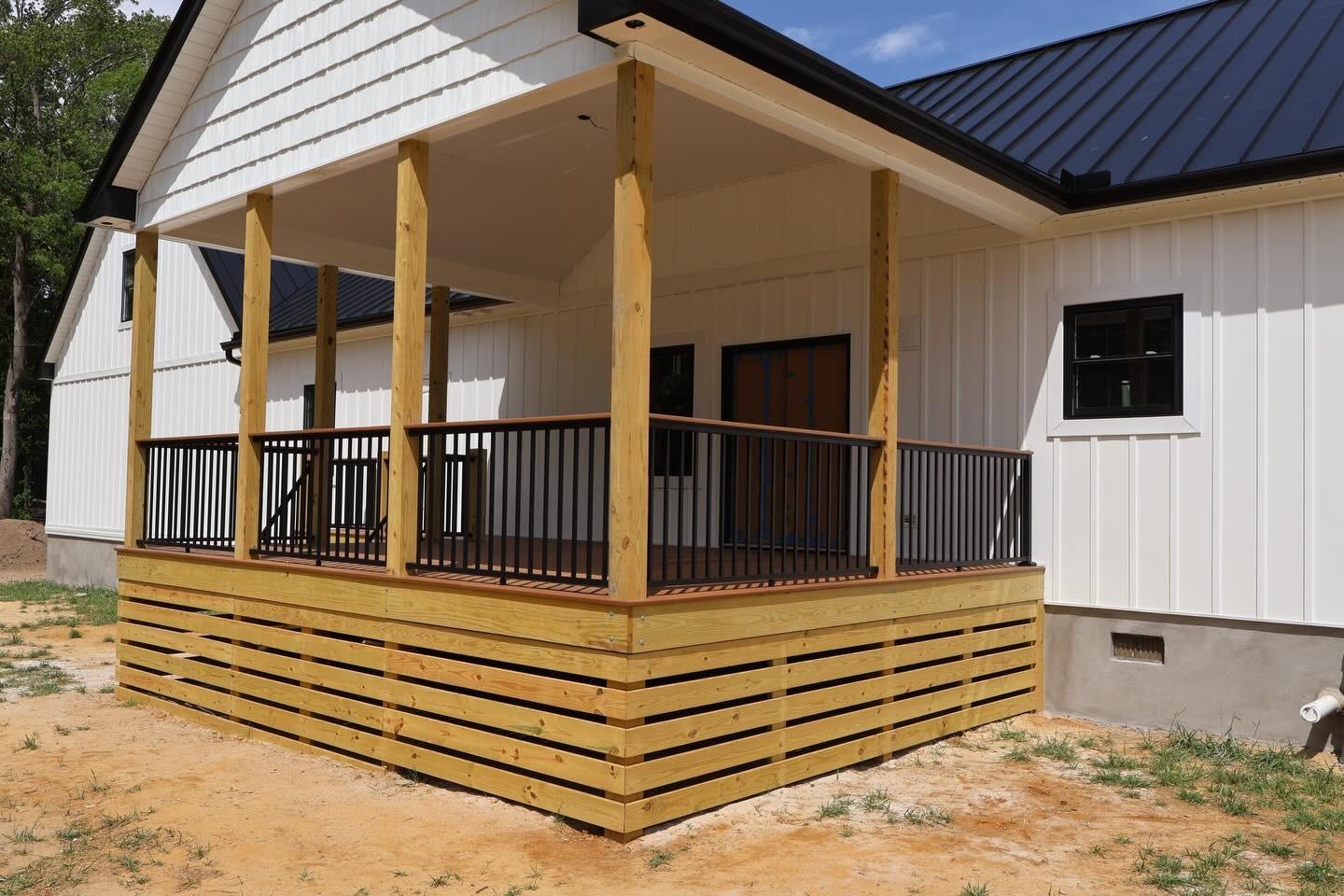
STZ Construction
Practical notes for planning the work before the first call.
A deck in eastern North Carolina needs to suit the way the family uses the space as well as its exposure to heat, rain, humidity, and shade. For a Wilson-area homeowner, choosing between pressure-treated lumber and composite decking starts with the actual site, the maintenance you are willing to do, and the complete installed scope.
The surface boards are only one part of the decision. Framing, stairs, railings, drainage, and connections to the house deserve attention before a board color is selected.
Start with the setting and daily use
Tell the contractor how you expect to use the deck. Dining furniture, a grill area, a covered seating space, and a route into the yard each affect the layout. Note which parts receive direct afternoon sun, where leaves collect, and whether the space beneath the deck stays damp.
Ask to see samples in the light where the deck will be built. Appearance, texture, and comfort in direct sun can vary between products. A sample and the manufacturer's current product guidance are more useful than assuming that every wood or composite board behaves the same way.
Compare maintenance as well as the initial scope
Pressure-treated wood can be a practical option when you prefer a wood surface and are prepared to maintain it. Ask what cleaning, finishing, inspections, and future board replacement the proposed product and site will need.
Composite decking can change the maintenance routine, but it still needs care. For example, Trex's care guide gives cleaning instructions by product family. Follow the guidance for the exact product being installed, including any limits on cleaning tools or products.
Instead of asking which material is maintenance-free, ask what you will need to do each year, how repairs are handled, and which tasks affect the manufacturer's warranty.
Make the structure part of the material conversation
A new surface cannot establish whether an older frame is suitable for reuse. The supporting structure and connections need their own assessment. Ask how the proposed decking relates to joist spacing, stairs, fasteners, ventilation, and water movement at the house.
Our guide to what makes a deck feel solid explains the structural questions to raise during a walkthrough. Final construction details should follow the selected product's instructions and the requirements applicable to the actual project.
Compare estimates on the same basis
Ask each estimate to identify the board product, railings, stairs, demolition and disposal, framing work, finish details, and cleanup. Clarify which conditions can only be assessed after existing boards are removed.
A material-only comparison may miss differences in the work included. Ask for a clear scope before deciding that two proposals are equivalent. Current project-specific pricing belongs in an estimate, rather than a general online price promise.
Plan your Wilson-area deck project
Send STZ photos of the existing deck or proposed location, the town or ZIP code, and your priorities for use and maintenance. Include whether the project is a new deck, replacement, or possible repair.
Explore our decks and outdoor living services or request an estimate to discuss the next step.
Continue planning this project
Pick the closest project type.
Pick the closest fit and the estimate funnel will skip ahead with that context already filled in.